Archives
- 2026-08
- 2026-07
- 2026-06
- 2026-05
- 2026-04
- 2026-03
- 2026-02
- 2026-01
- 2025-12
- 2025-11
- 2025-10
- 2025-09
- 2025-04
- 2025-03
- 2025-02
- 2025-01
- 2024-12
- 2024-11
- 2024-10
- 2024-09
- 2024-08
- 2024-07
- 2024-06
- 2024-05
- 2024-04
- 2024-03
- 2024-02
- 2024-01
- 2023-12
- 2023-11
- 2023-10
- 2023-09
- 2023-08
- 2023-07
- 2023-06
- 2023-05
- 2023-04
- 2023-03
- 2023-02
- 2023-01
- 2022-12
- 2022-11
- 2022-10
- 2022-09
- 2022-08
- 2022-07
- 2022-06
- 2022-05
- 2022-04
- 2022-03
- 2022-02
- 2022-01
- 2021-12
- 2021-11
- 2021-10
- 2021-09
- 2021-08
- 2021-07
- 2021-06
- 2021-05
- 2021-04
- 2021-03
- 2021-02
- 2021-01
- 2020-12
- 2020-11
- 2020-10
- 2020-09
- 2020-08
- 2020-07
- 2020-06
- 2020-05
- 2020-04
- 2020-03
- 2020-02
- 2020-01
- 2019-12
- 2019-11
- 2019-10
- 2019-09
- 2019-08
- 2019-07
- 2019-06
- 2019-05
- 2019-04
- 2018-11
- 2018-10
- 2018-07
-
Herein the interactions of etamicastat nepicastat
2020-03-16
Herein, the interactions of etamicastat, nepicastat and zamicastat with P-gp and BCRP were evaluated. Although recent investigations have been performed to assess the involvement of P-gp in the ZM 306416 exposure of nepicastat and etamicastat (Loureiro et al., 2015), the contribution of BCRP remains
-
The genomic DNA sequences of CXCL and
2020-03-16
The genomic DNA sequences of CXCL8 and CXCRs were retrieved from the fugu genome database v4.0. The intron–exon boundaries were identified with the corresponding cDNA sequences. This comparison revealed that the fugu gene is about 1.13kb long and contains four exons separated by three introns (top
-
Building applications by selecting and integrating component
2020-03-16
Building applications by selecting and integrating components is known in software engineering as COTS-based development. Nowadays, this approach is recognized as a crucial success factor for the software industry (Ahuja, 2014). The advantages of using COTS components include minimizing the overall
-
Our earlier experimental studies showed neutral
2020-03-16

Our earlier experimental studies showed \"neutral\", i.e. non-proliferative, effects of progesterone but a large increase in proliferation using certain progestins; however, this was only in the presence of PGRMC1 [[13], [14], [15], [16], [17], [18], [19]]. The next step was to investigate whether t
-
Oxysterols modulate the immune responses and as such could
2020-03-13
Oxysterols modulate the immune responses and as such could be effectors of the tumor environment: 25-OHC impairs IgA production in B-lymphocytes [26] and induces the secretion of the proinflammatory and angiogenic cytokine IL-8 [27], [28]. Of note, oxysterols (in particular 7α,25-OHC) are potent che
-
Both meiotic COs and NCOs require DNA
2020-03-13
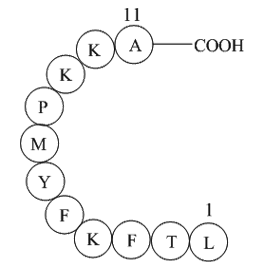
Both meiotic COs and NCOs require DNA synthesis, current data from sequencing also suggest that COs require more DNA synthesis than NCO 63., 64., 65.. However, analysis of the role of DNA synthesis in NCOs remains relatively uncharacterized. Emerging evidence points to a role for either Polδ or Polε
-
Films treated with Diaz ES VWFIIINle but not
2020-03-13
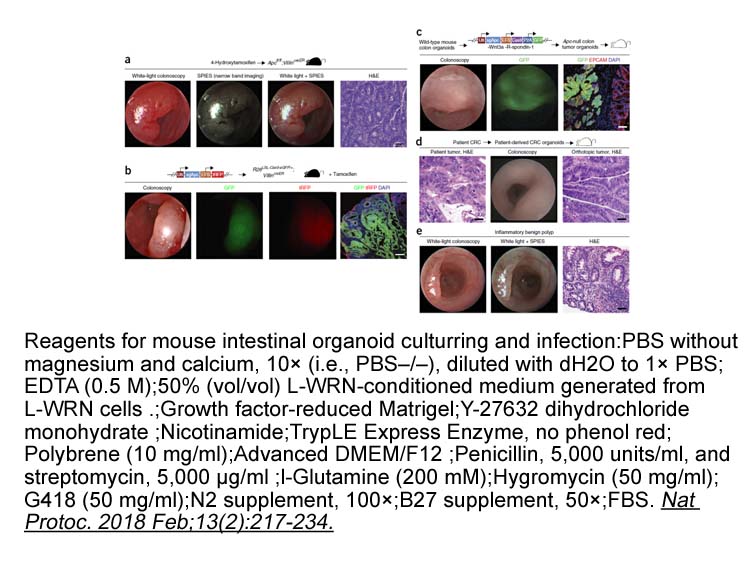
Films treated with Diaz-ES-VWFIIINle but not exposed to UV light supported only slight platelet deposition, suggesting that passively-bound peptides were removed under shear. However, treatment with Diaz-ES-VWFIIINle and UV restored platelet surface coverage to about 50% of the level on native colla
-
Some limitations to our study should
2020-03-13
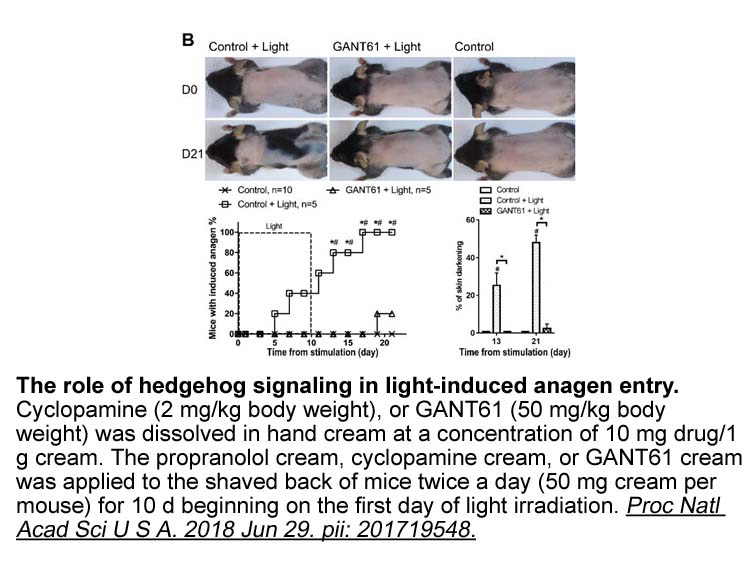
Some limitations to our study should be noted. First, the sample size of our study was limited. As DDR2 mutations are rare in lung SCC, it is possible that the power of our study was insufficient to detect potential associated factors. Second, a significant proportion of the 271 sequenced patients h
-
Eukaryotic cell cycle machinery is thought to
2020-03-13
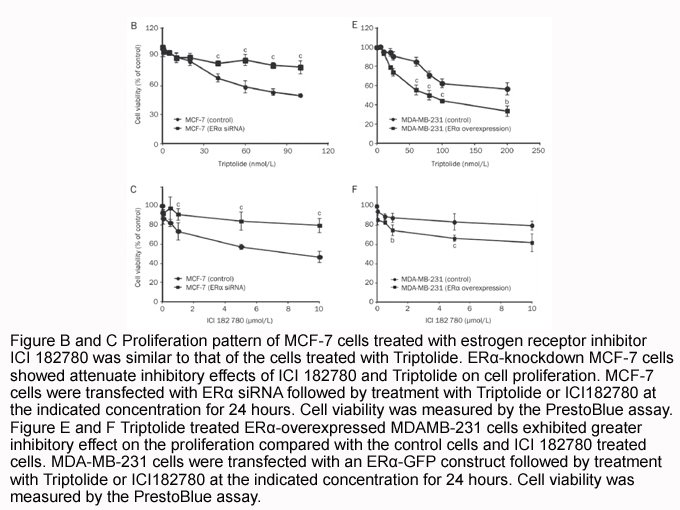
Eukaryotic cell cycle machinery is thought to appropriately modulate cell proliferation and cell expansion in various developmental stages and environmental conditions. The core feature of cell-cycle control is the fluctuation of CDK activity, which is regulated by three interactive and conserved me
-
br Limitations of the study br Possible conflicts of
2020-03-13
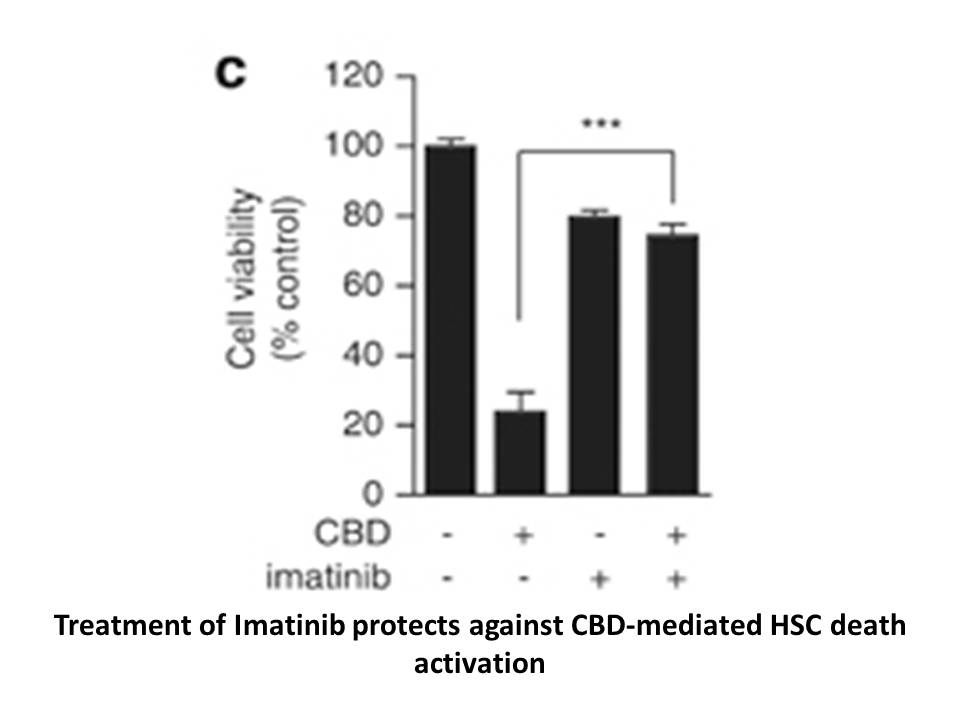
Limitations of the study Possible conflicts of interest Dr. Fayemiwo or SAF has received full financial support from Europe Gilead Sciences Ltd. for his M.Sc. degree programme in Medical Mycology and has been paid for talks on behalf of AstraZeneca and GSK. Caroline Moore or CBM has received
-
On top of the hardware ASTS employs Linux
2020-03-13

On top of the hardware, ASTS employs Linux SUSE with High-Availability (HA) Extension: a COTS OS provided with two clustering software (Pacemaker Cluster Resource Manager (CRM) and Corosync) responsible for resources orchestration, failure diagnosis, nodes coordination, and fail-over management. The
-
Curcumin is a polyphenol extracted from turmeric which is co
2020-03-13
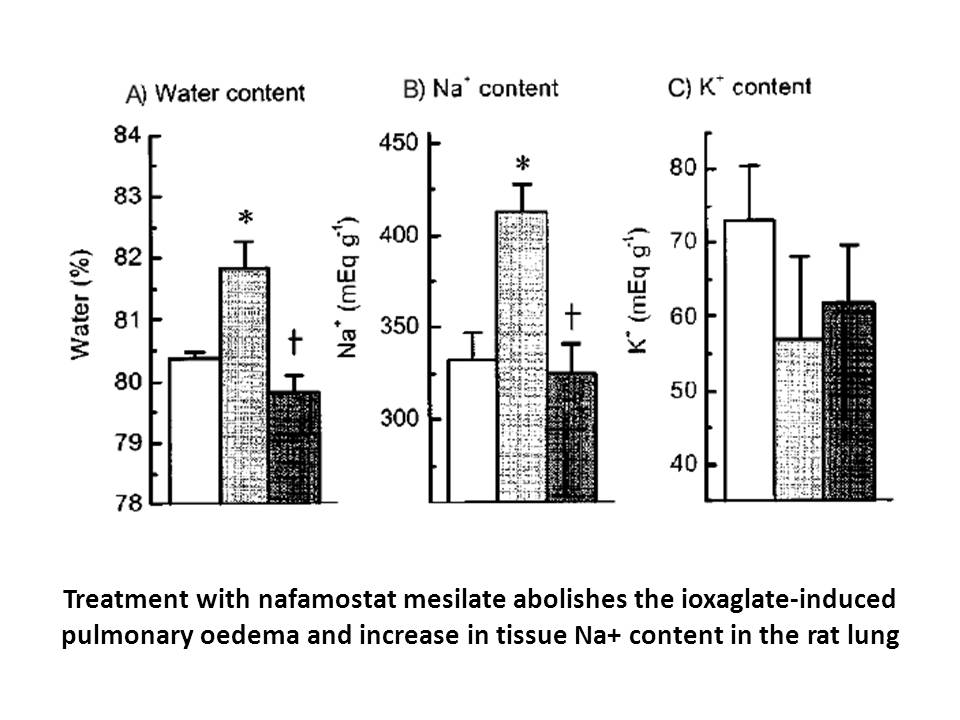
Curcumin is a polyphenol extracted from turmeric, which is commonly used as a spice and food-coloring agent in many cultures [9]. Curcumin possesses anti-inflammatory, antioxidant, and cancer-preventive properties [10], [11], [12]. In addition to these well-known effects, consuming curcumin may bene
-
What is the predominant mechanism
2020-03-13
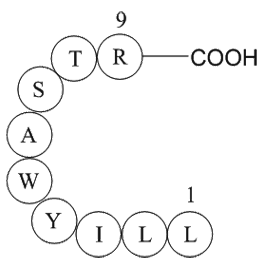
What is the predominant mechanism underlying the benefits of udenafil, i.e. the vascular vs. myocardial effect? Lewis et al. suggested that the benefit of sildenafil in HFrEF would be derived from augmented RV systolic function that mainly results from pulmonary vasodilation, suggestive of the ‘vasc
-
For immobilization of enzymes natural polymers depict
2020-03-13

For immobilization of enzymes, natural polymers depict several outstanding features as support. These materials are inert, non-toxic, biodegradable and biocompatible. As well as, they can be treated with different functional groups easily by chemical reactions that occur under gentle conditions in a
-
Given the important regulatory roles Ub
2020-03-13
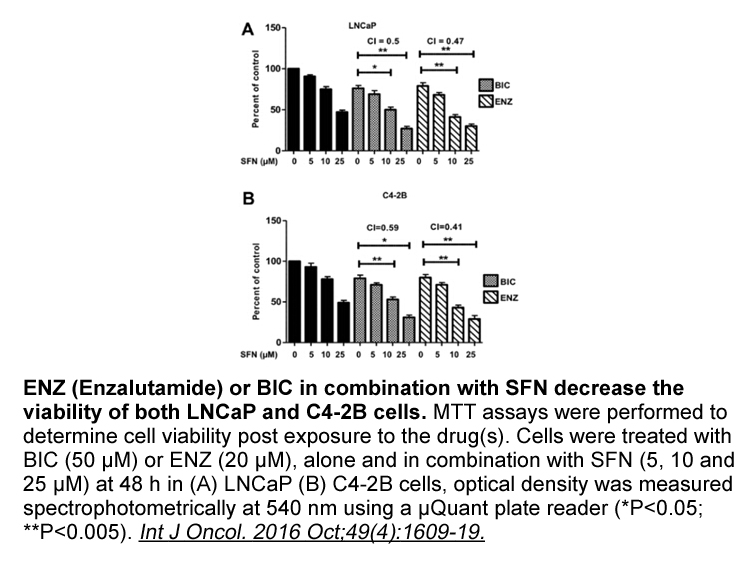
Given the important regulatory roles Ub signaling pathways play in eukaryotes, bacterial pathogens and viruses have evolved elaborate mechanisms to hijack host Ub signaling pathways and evade the immune response. This is highlighted by the numerous E3 Ub ligases and spectrum of DUBs encoded by bacte
16772 records 914/1119 page Previous Next First page 上5页 911912913914915 下5页 Last page